Our Story
A Legacy Reborn
Canelli, 1934. The documented story of Alfredo Soria — and the label that brought it back.
Alfredo Soria belongs to the founding tradition of Italian vermouth — born in the very landscape that made Vermouth di Torino a recognised, protected category. The family is interwoven with the winemaking dynasties of Canelli: Alfredo's mother was a daughter of Luigi Bosca, founder of the wine house that bears his name, and cousins belonged to the Contratto family. On 16 March 1934, the firm "Alfredo Soria" was established in Canelli — the cradle of Piedmont's aromatic wines, today part of a UNESCO World Heritage landscape — to produce wines, vermouth and sparkling wines. Its complete file still survives in the historical archive of the Chamber of Commerce of Asti and Alessandria: a heritage that can be verified, date by date.
Even before wine, the family's story begins with hospitality. At the turn of the twentieth century the Sorias ran some of the best-known hotels in southern Piedmont — the Croce Bianca in Canelli, then the Gambero d'Oro, the Corona Grossa and the Pesce d'Oro in Bra — praised by the chronicles of the day for their "choice wines, fine cuisine and moderate prices". That instinct still defines the brand: vermouth as a convivial moment, a way of putting guests at ease. Young Alfredo trained abroad too — in 1914, alongside his cousin Armando, he worked in the cellars of Épernay, in Champagne, learning the méthode champenoise: an early sign of the house's international spirit.
From its earliest years, the house was built for export. By 1938 the brand was listed in the national yearbook of the Italian wine and liquor industry; by 1940 its export business was formally registered, and private letters preserved in the family tell of constant travel to Paris, Lyon, Marseille and Nice. Certificates of analysis kept in the archives attest to products "natural and free of alterations", destined for foreign markets — and family memory, like the rediscovered label itself, recalls a reach that extended as far as the United States. The house carried on until Alfredo's death. His only daughter, Maria Rosa, had married and moved to Valpolicella and could not take over the firm — so the brand fell silent, and the recipes and labels passed into the family's safekeeping.
"This heritage places Alfredo Soria in the same lineage as the pioneers who defined Vermouth di Torino."
Then, in September 2024, a label rediscovered in the old family house in Canelli changed everything. Ninety years after the firm was founded, the Soria name returns with the Vermouth di Torino Rosso: built, as tradition demands, on the category's two historic wines — Piemonte Cortese DOC and Moscato d'Asti DOCG. Faithful to the family recipe, refreshed for the modern aperitivo.
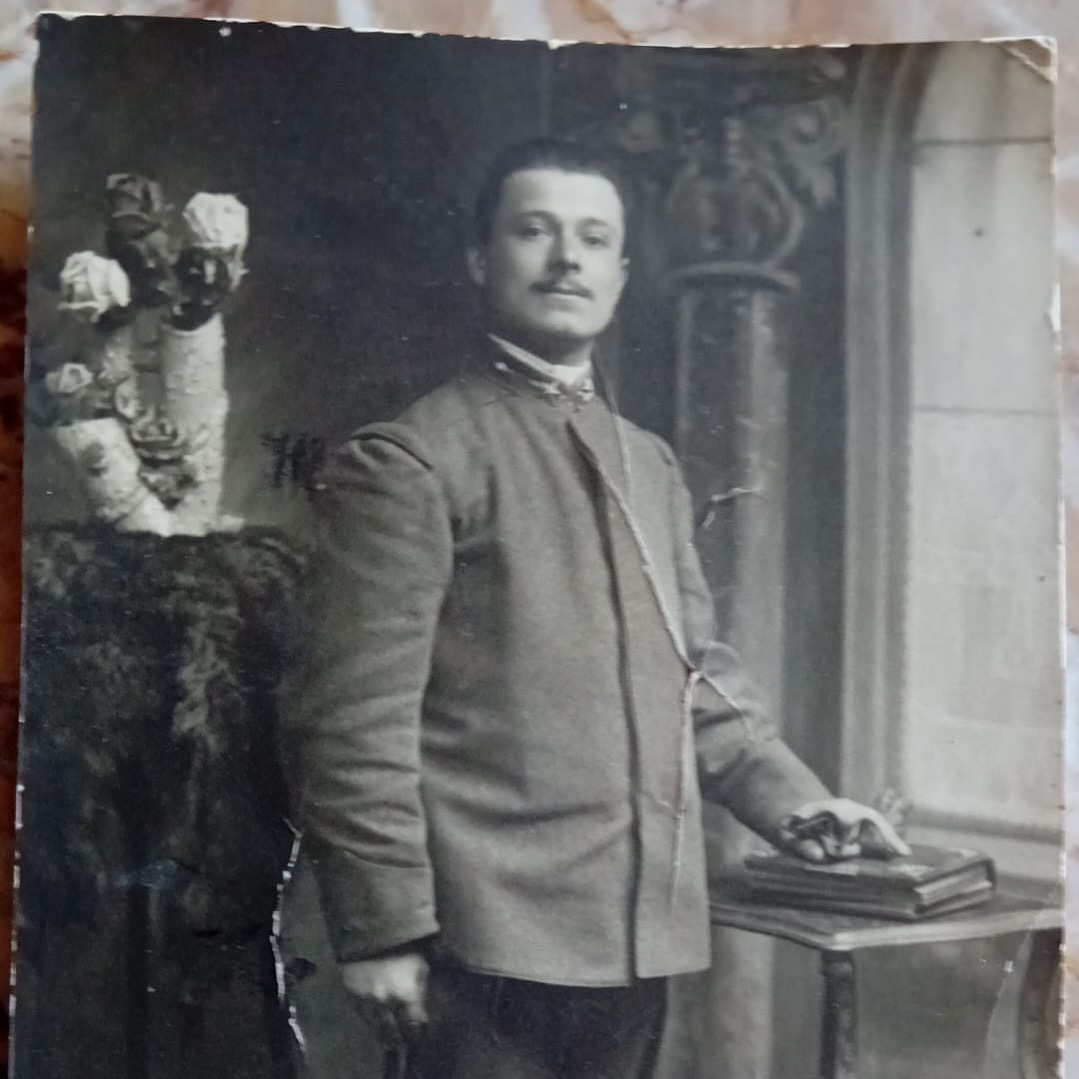
Alfredo Soria, Founder
Historical Note
The firm's complete file is preserved in the Chamber of Commerce archive, and the Soria trademark is recorded in MaToSto®, the national database of historic Italian trademarks. When Alfredo died, his only daughter Maria Rosa could not take over the business; the recipe was locked away in a bank safe-deposit box — dormant, but never lost — until the relaunch.
What We Stand For
Documented authenticity
The story of Alfredo Soria is not a marketing invention: it is reconstructed from archival records, chamber-of-commerce registers, industry yearbooks and family memory. Every date has a source.
Wine at the centre
Faithful to the great school of Vermouth di Torino, quality begins with the base: Piemonte Cortese DOC and Moscato d'Asti DOCG.
Piedmontese craftsmanship, international outlook
Born in Canelli and raised on export, the brand has always been a bridge between Piedmont and the world — France and the United States yesterday; Asia and the global aperitivo markets today.
Family continuity
Four generations connect Giulia to Alfredo: this rebirth is, above all, the continuation of a family story — and a gift to Alfredo's only daughter.
The Discovery
Where It AllBegan
September 2024, during the harvest. In the "old house" in Canelli — its furniture, and its memories, still in place — Giulia was showing her daughter Chiara and her husband Björn the family photographs when they came across something extraordinary: an original label of Alfredo Soria vermouth, a fragment of paper perfectly preserved since the 1930s.
More than a keepsake, the label was tangible proof of a once-celebrated brand: established in Canelli in 1934, listed in the national wine and liquor yearbook by 1938, exported to France, and remembered as far away as the United States.
That label became the catalyst for a revival — the original recipe was found and reconstructed, and nonno Alfredo's vermouth set out once more for aperitivo tables around the world. A tribute, above all, to Giulia's grandmother Maria Rosa, Alfredo's only daughter, who still lives in Canelli.
1934
Established
2025
Revived
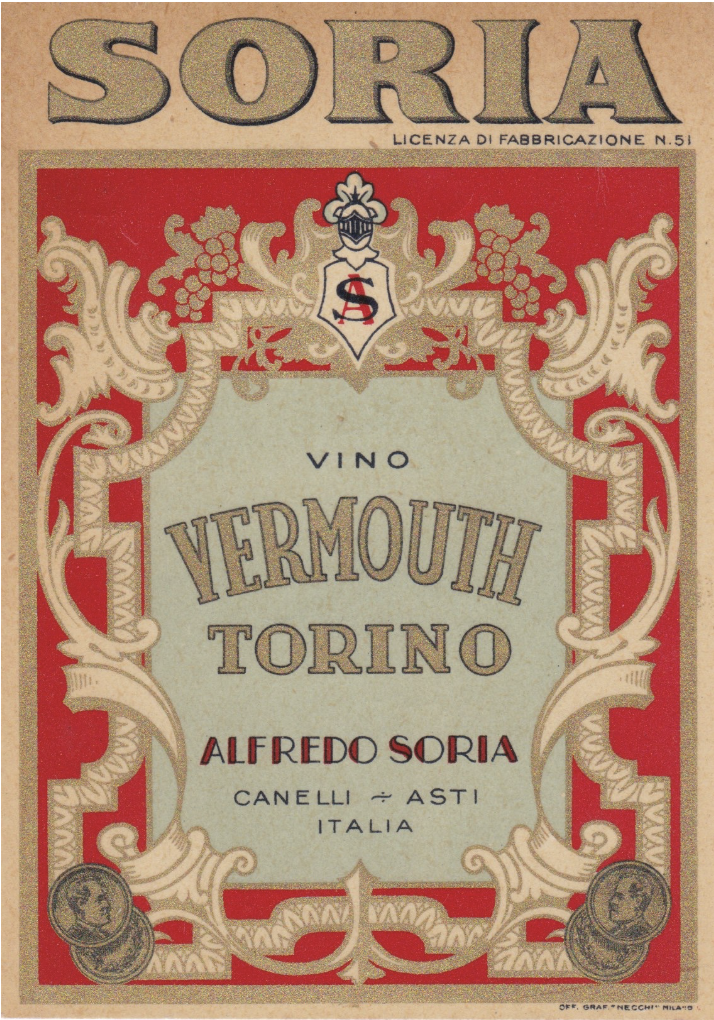
Original Label, Est. 1934
Ninety Years
From Canelli to now
1934
Alfredo Soria founds his vermouth house in Canelli, in the heart of Piemonte.
1938
The brand is listed in the national wine and liquor yearbook, and exported to France.
1950s
Bottles travel as far as the United States, where the name is still remembered.
2024
During the harvest, an original 1930s label resurfaces in the old family house.
2025
Ninety years on, the recipe is reconstructed and the Heritage Edition is released.
Did You Know?
A Family of Wine Innovation
Ernesto Barbero, who married Alfredo Soria's daughter Maria Rosa, went on to become a legendary figure in Italian winemaking. In the 1950s, while working at the prestigious Bertani winery, he played a pivotal role in developing what we now know as Amarone della Valpolicella.
This revolutionary wine, made from dried grapes using ancient techniques, transformed the Veneto region and became one of Italy's most celebrated wines. The same innovative spirit that drove Ernesto to perfect Amarone now flows through the revival of the Soria Vermouth legacy.
From vermouth to Amarone—a family tradition of exceptional Italian wines